


Health7 min read
NAFDAC HAS FAILED US: HOW TO STAY HEALTHY IN NIGERIA’S “FAKE EVERYTHING” ERA
There is a pandemic of fake drugs, edibles, cosmetics and literally everything consumable going on in Nigeria, and this…
 Precious Iloduba
 Precious Iloduba
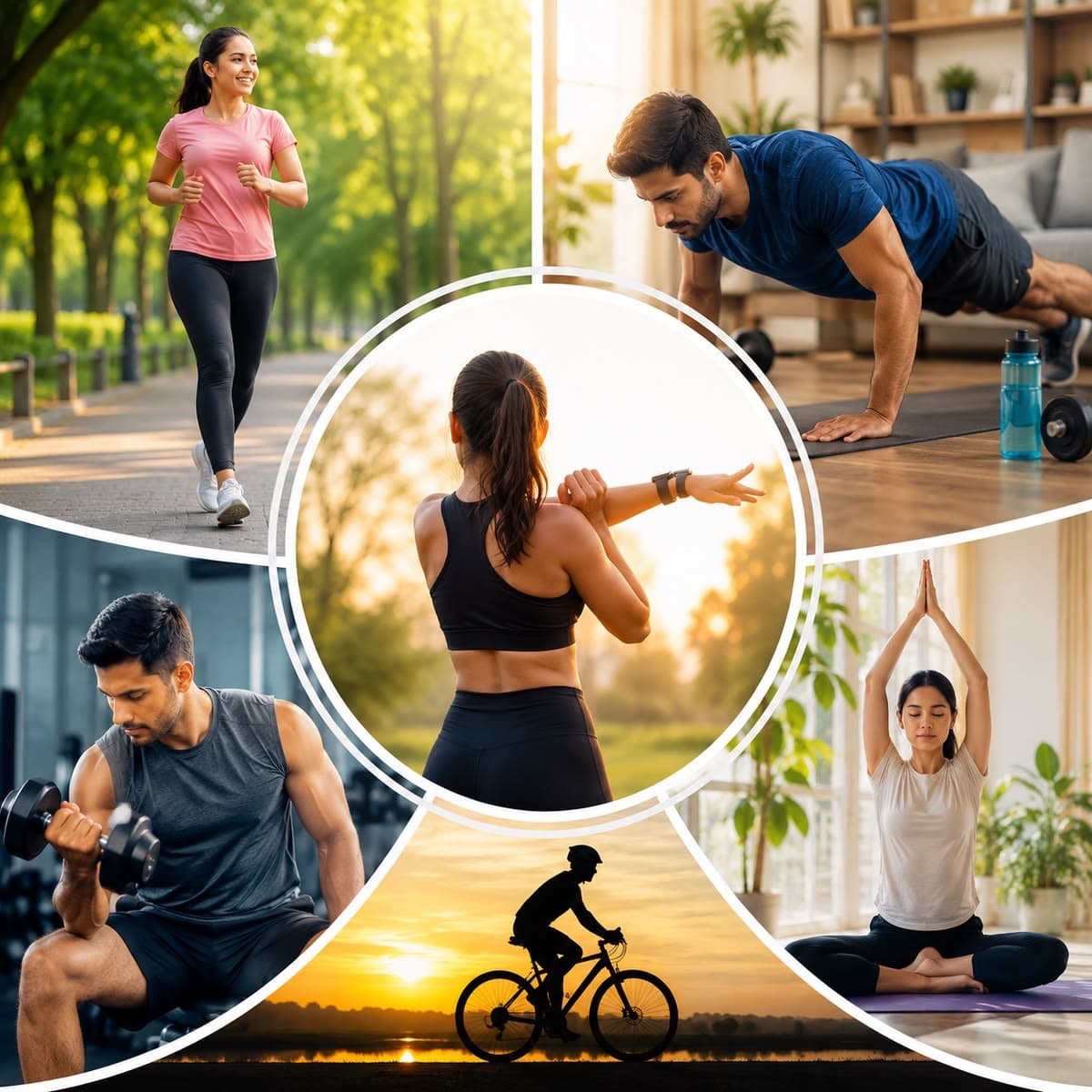
Exercise does far more than help you lose weight. Regular physical activity can improve your mood and sleep, strengthen your muscles and bones, support your heart, improve your energy and mobility, help your body manage blood sugar, and contribute to better long-term health.
Is Exercise Seriously Underrated?
For something that is supposed to be such an important part of staying healthy, exercise has somehow been reduced to one simple idea: lose weight.
You gain a few kilos and somebody tells you to start exercising. Your clothes become tighter and suddenly everyone has workout advice. You decide you want to lose your stomach, and the first suggestion is usually the same: go to the gym. Even on social media, exercise is often presented alongside before-and-after pictures, smaller waists, bigger glutes and numbers on weighing scales.
There is absolutely nothing wrong with wanting to lose weight or change the way your body looks. Those are perfectly valid reasons to exercise. But when that becomes the only reason we think exercise matters, we miss a huge part of the story.
Your body is doing so much more when you move.
Your heart is working harder and becoming better at its job. Your muscles are being challenged and becoming stronger. Your bones are getting support. Your brain is getting a break from sitting in the same position all day. You may sleep better, have more energy and find yourself doing everyday things with less effort.
Think about the difference between someone who spends most of their day sitting and someone who regularly walks, exercises, dances, plays sports or lifts weights. Even if both people weigh exactly the same, their bodies can function very differently.
That is why exercise deserves more credit than we usually give it. It is not simply something you do because you want to look smaller. It is one of the ways you take care of the machine that carries you through life.
And the interesting thing is that you do not need to spend three hours in the gym every day to benefit from it.
Here are ten things exercise can do for you that have very little to do with the number on your weighing scale.
Have you ever had one of those days when you are irritated by practically everything? Maybe you woke up in a bad mood, spent hours on your phone, dealt with work or school, had an argument with someone, and by evening you just wanted to disappear into your bed.
Sometimes, going for a walk or doing a workout can change how you feel.
It does not mean your problems have magically disappeared. Your unpaid bills are still there, your annoying colleague is still annoying, and whatever was stressing you out in the first place has probably not gone anywhere. But after moving your body, you may find that your mind feels less crowded and your mood is lighter.
There is a reason for that. Physical activity affects chemicals in the brain that are connected to mood and feelings of wellbeing. This is one reason exercise is often associated with better mental wellbeing and lower feelings of stress.
Of course, exercise is not a replacement for professional help when someone is dealing with a serious mental-health condition. But as part of everyday life, movement can be a surprisingly useful way to give your mind a reset.
Sometimes, the solution to a stressful afternoon is not another hour of scrolling through Instagram in bed. Sometimes, it is putting on comfortable shoes and taking a walk.
There is a difference between being tired because you have spent the entire day doing nothing and being tired because your body has actually been active.
If you have ever had a proper workout and later found yourself sleeping deeply, you probably understand the feeling. Regular physical activity can help support a healthier sleep pattern and make it easier for some people to fall asleep and get better-quality rest.
This makes sense when you think about how sedentary modern life has become. Many of us wake up, sit down to work or study, sit in traffic, sit at home, watch television, scroll on our phones and then wonder why our bodies do not feel ready to sleep at night.
Our bodies need movement.
Exercise does not guarantee perfect sleep, especially if there are other things keeping you awake, but becoming more physically active can be one useful part of improving your sleep routine.
So if you have been spending your nights scrolling TikTok until 2 a.m. and complaining that you cannot sleep, perhaps your body needs more movement during the day and less screen time at night.
When people talk about exercise, they usually talk about muscles, weight loss and body shape. The heart does not get nearly as much attention, even though it is working every minute of every day.
Whenever you walk briskly, run, dance, cycle, swim or do another activity that gets your heart beating faster, you are challenging your cardiovascular system. Over time, regular physical activity can help improve your cardiovascular fitness and support heart health.
You may notice this without even thinking about it.
Maybe climbing two flights of stairs used to leave you standing there and wondering why the building was suddenly so tall. After months of being more active, you climb those same stairs and realise you are not as breathless as you used to be.
That is a form of progress too.
It may not look as exciting as losing five centimetres from your waist, but your body has become better at handling physical work. And that matters.
One of the best things about becoming stronger is that you eventually start noticing it outside the gym.
Carrying several bags from the market becomes easier. Moving a chair or table around the house is less of a struggle. Carrying your luggage while travelling does not feel like you have been assigned a punishment. Even getting up from the floor can become easier.
That is what strength is actually for.
Of course, there is nothing wrong with wanting defined arms, bigger legs or stronger glutes. Those goals can be motivating, and strength training can certainly change the way your body looks. But underneath the physical changes is something even more useful: you are building a body that can handle more.
You do not have to become a bodybuilder to benefit from strength training. Sometimes, you simply want to be able to carry your own things without looking around for somebody to rescue you.
Your muscles are not the only part of your body that benefits from movement. Your bones need attention too, especially as you get older.
Weight-bearing activities and resistance exercises can help support bone strength. Walking, running, dancing and strength training are examples of activities that put healthy demands on your bones.
It is easy to ignore bone health when you are young because nobody wakes up at 23 thinking, “I really need to protect my bones today.” Most of us are more concerned about our stomach, thighs, skin or hair.
But your future self is going to need those bones.
Taking care of your body is not only about looking good today. It is also about giving yourself a better chance of staying strong, mobile and independent as you grow older.
This sounds strange at first. How can something that makes you tired give you more energy?
But think about what happens when you become physically fitter. Activities that once exhausted you gradually become easier. A walk that used to leave you tired becomes normal. You can stand for longer, walk for longer and get through your day without feeling like every little physical task is draining the life out of you.
Your body adapts to what you regularly ask it to do.
That is why someone who exercises consistently may be able to walk for an hour without thinking twice, while someone who rarely moves may feel exhausted after a much shorter distance.
Exercise uses energy in the moment, but regular activity can improve your physical fitness and stamina over time. You are essentially teaching your body to handle life better.
And honestly, that is one of the most underrated parts of getting fit.
This may sound technical, but the basic idea is actually quite simple.
When you eat, some of the food you consume is broken down into glucose, which your body uses for energy. Your muscles can use that glucose when you are physically active, and regular exercise can help your body respond better to insulin, the hormone involved in controlling blood sugar.
This is one reason staying active matters for metabolic health.
And you do not need to spend two hours lifting weights to get moving. Taking a walk after eating, dancing around your room, doing household chores, playing football or simply walking more throughout the day all contribute to your overall activity.
If you have diabetes or another medical condition affecting blood sugar, exercise should be discussed as part of your overall care rather than treated as a replacement for medication or medical advice. But for the general population, staying active is one of the habits that can support better health.
Being able to move your body comfortably is something we often take for granted until it becomes difficult.
Think about bending down to pick something up, squatting to reach a low shelf, reaching for something above your head, getting out of a chair or walking for a long period without discomfort. These ordinary movements are part of what makes life easier.
Exercise can help you maintain strength, balance, flexibility and mobility, depending on the type of activity you do.
This is particularly important as we age. Nobody wants to spend their later years struggling with movements that used to be effortless simply because they stopped using their body.
Fitness is not just about how you look in a mirror.
Sometimes, fitness is being able to get down on the floor and stand back up without turning it into a full event.
Some benefits of exercise are not immediately visible.
You cannot look in the mirror after a workout and see that your future risk of certain health problems has changed. There is no dramatic before-and-after picture for better cardiovascular health or improved blood sugar control.
But those things still matter.
Regular physical activity is associated with a lower risk of several chronic health conditions, including heart disease and type 2 diabetes. It can also support overall physical functioning as you get older.
Of course, exercise is not a magic shield against illness. People can exercise regularly and still become sick. Genetics, age, diet, environment, stress and many other factors affect health.
But that does not make exercise pointless. It simply means health is complicated.
Sometimes, taking care of yourself means doing the simple things that support your body over many years rather than looking for one perfect habit that guarantees everything will be fine.
This one is probably the least talked about.
There is something that happens when you start doing something consistently, especially when it is difficult at first.
Maybe the first time you went to the gym, you felt completely lost. You did a few exercises, everything hurt the next day, and you wondered how people willingly put themselves through this.
Then you went again.
And again.
Eventually, the exercise that once felt difficult became familiar. You lifted a heavier weight. You walked for longer. You did more repetitions. You noticed that something you could not do three months ago was now easy.
Those moments can change the way you see yourself.
You begin to realise that you can improve at something simply by staying with it. You learn that being uncomfortable does not automatically mean you should quit. You discover that progress can be slow and still be real.
And that lesson can follow you outside the gym.
It can affect how you approach your career, relationships, finances, writing, school or any other area of your life where consistency matters.
Sometimes, the biggest thing exercise gives you is not a different body.
It is evidence that you can keep a promise to yourself.
Do You Have to Go to the Gym to Get These Benefits?
Not at all.
The gym is one option, and it can be particularly useful if you want to build muscle or follow a structured strength-training programme. But movement existed long before gym memberships did.
You can walk around your neighbourhood. You can dance in your room. You can play football with your friends. You can cycle, swim, hike or follow a workout at home. You can take the stairs instead of the lift when it makes sense. Even ordinary activities such as cleaning and doing chores involve movement.
The important thing is finding forms of activity that fit into your life well enough for you to actually continue doing them.
There is no prize for choosing the most painful workout.
Exercise does not have to be punishment for eating a plate of jollof rice. It does not have to be something you dread every morning. And it does not have to leave you crawling out of the gym before it “counts.”
The goal is to move your body regularly and in a way that supports your health and your personal goals.
Is exercise only beneficial for weight loss?
No. Exercise can support heart health, muscle and bone strength, mental wellbeing, sleep, energy, mobility and long-term health, whether or not you lose weight.
Does walking count as exercise?
Yes. Walking, particularly brisk walking, is a simple and accessible form of physical activity. You do not need a gym membership for walking to count.
How much exercise do adults need?
General guidelines recommend that adults aim for at least 150 minutes of moderate-intensity physical activity each week, along with muscle-strengthening activities on at least two days. The amount and type that is appropriate can vary depending on someone’s health and fitness level.
Can exercise improve your mental health?
Exercise can support mental wellbeing and may help with stress and mood. However, it should not replace professional treatment when someone is dealing with a mental-health condition that requires care.
Do I need to exercise every day?
No. You can spread your physical activity throughout the week, and rest is important, especially when you are doing challenging workouts.
Can I benefit from exercise even if I don’t lose weight?
Absolutely. Changes in fitness, strength, stamina, sleep, mood and overall health can happen independently of changes on the scale.
In conclusion?
Maybe we have been giving exercise too little credit because we have spent years measuring its value by one thing: weight loss.
But your body is not a weighing scale.
It is your heart, your muscles, your bones, your brain, your lungs and every other part of you that has to carry you through ordinary life. When you exercise, you are not simply trying to burn off what you ate or make yourself smaller. You are giving your body a reason to become stronger and more capable.
And perhaps that is the better way to look at exercise.
Yes, you can exercise because you want to lose weight. You can exercise because you want bigger muscles, a smaller waist or better body composition. But you can also exercise because you want to sleep better, have more energy, climb the stairs without gasping for air, carry your own bags, clear your head after a stressful day or simply remain strong enough to enjoy your life as you get older.
The mirror may show you some of the changes.
But your body will feel the rest.
Get thoughtful stories, useful ideas, practical insights and fresh perspectives on life, money, health, work and everything in between straight to your inbox.
There is a pandemic of fake drugs, edibles, cosmetics and literally everything consumable going on in Nigeria, and this…
Precious Iloduba
What happens when the business you started to achieve financial freedom becomes the very thing that frustrates you? We…
 Precious Iloduba
Introduction One of the hardest things to do currently as an average Nigerian is to save money. What’s the minimum…
 Precious Iloduba
Comments